

About
After DNA damage is repaired, how does a cell fully recover its functions?
Our team investigates the molecular choreography that restores transcriptional activity and nuclear/nucleolar architecture.
Our Research
One of the most fascinating – and still relatively unexplored – aspects of DNA repair concerns how cells are able to fully restore their functions once DNA lesions have been removed and genomic integrity has been re-established.
DNA damage not only interferes with transcription, replication, and cell cycle progression, but can also disrupt nuclear architecture, altering chromatin domain positioning and nucleolar organization.
Our team focuses on the molecular mechanisms that allow cells to regain normal transcriptional activity after DNA repair. In particular, we study the reorganization of nucleolar structure, an essential yet poorly understood process.

Research Project
The nucleolus is a membrane-less nuclear compartment with a highly ordered internal organization, tightly linked to its main role in ribosome biogenesis. This includes the transcription of ribosomal DNA (rDNA) by RNA polymerase I (RNAP1) and the early maturation of ribosomal RNA.
This sophisticated organization can be severely disrupted by genotoxic agents or by general cellular stress. In recent years, our work has shown that following genotoxic stress such as ultraviolet (UV) irradiation, RNA polymerase I and ribosomal DNA are relocated to the nucleolar periphery. Remarkably, nucleolar architecture is only restored once all rDNA lesions – in both active and inactive regions – have been repaired.
Complete restoration of the nucleolus therefore depends not only on efficient DNA repair systems, but also on the action of key proteins. Among these, the SMN protein (Survival of Motor Neuron), which is defective in patients with spinal muscular atrophy (SMA), plays a central role. We have demonstrated that in the absence of SMN, RNA polymerase I remains trapped at the nucleolar periphery even after DNA damage repair is completed. Strikingly, SMN translocates from Cajal bodies (CBs) to the nucleolus immediately after repair, but before nucleolar structure is fully re-established.
Our Objectives
We have different project research axis :
How SMN Protein Moves and Maintains Nucleolar Health
How Cajal Bodies and the Nucleolus Respond to DNA Damage
Members








Events

Advances in SMN Research: From Molecular Mechanisms to Therapeutic Strategies 📅 Tuesday 25 August 2026🕐 13:30–17:30📍 Faculté de Médecine, Lyon — Room HERMANN […]
We are seeking a highly motivated postdoctoral candidate to apply for the Marie Skłodowska-Curie Actions Postdoctoral Fellowships (MSCA-PF) 2026. 📅 […]

Shaqraa Musawi
Elena CERUTTI The integrity of DNA is continuously challenged by a variety of endogenous and exogenous agents (e.g. ultraviolet light, […]
News

🌟 What a memorable day for the SMN research community in Lyon! On August 25th, scientists from different horizons came […]

This afternoon, our laboratory had the honor of welcoming donors and volunteers from the AFM‑Téléthon. This exchange provided an opportunity […]

With enthusiasm and determination, we look forward to the year ahead, ready to embrace new challenges, advance our work, and […]
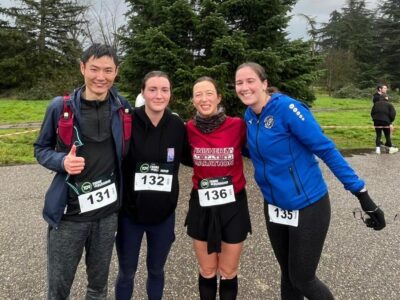
Devoting the week to advancing our understanding of neuromuscular diseases and developing new treatments, then running for the AFM-Téléthon over […]
Projects
