
Leïla Langbour
The main focus of the team is to understand the importance of autophagy and the selective autophagy of mitochondria (the so called mitophagy) processes in physiological conditions such as aging, neurodevelopment. Also, we aim to better understand how these processes are deregulated in pathologies such as neurodegenerative diseases, muscular disease and to develop tools to manipulate them. We believe that our goals are of the utmost importance in the biology of neurogenerative diseases, but also in the context of muscular diseases since autophagy is deregulated in many of these disorders.

To this end, we are combining techniques such as biochemistry (western-blotting, immunoprecipitation, kinase assay etc…), confocal microscopy analysis, in vivo manipulation of autophagy in brain of mice (injection of AAV encoding autophagic proteins or fluorescent reporters of mitophagy; nanoparticle manipulation etc.).


Fundings
Over the past few years, the team has received support from several funding organizations. The most recent funding includes grants from France Alzheimer (2022-2024), Arqus (2025), the Ligue contre le cancer (2025-2026), the Fondation Alzheimer (2025-2027), and the Fondation Recherche Alzheimer (2026-2028). The team also receives support from AFM-Téléthon through its participation in the MyoNeurALP strategic research program.


Our other activities
- Members of the team are part of the Scientific Committee of the French Autophagy Club (Club Francophone de l’Autophagie – CFATG) and are also members of the American association Women in Autophagy.
- The team gathers members of Lyon and Roma doctoral schools.
- Members of the team were involved in organization of 5 national and international meetings since 2022.
- We are also participating in public science outreach events.

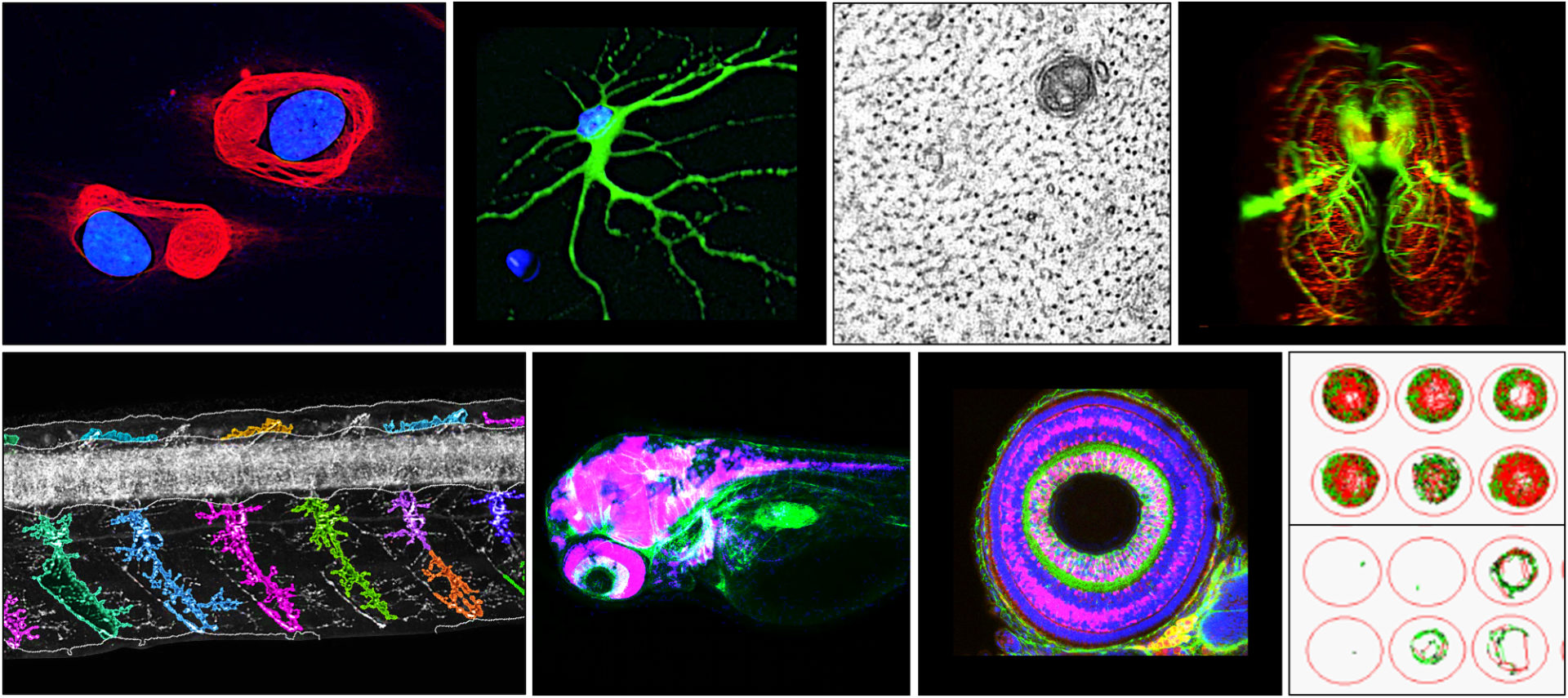
Our team studies the cellular and molecular basis sustaining neuronal integrity, and deciphers the mechanisms underlying neurodegeneration and/or developmental defects in disease. We combine fundamental and applied research, because we are convinced that the knowledge of the nervous system feeds therapeutic development, and reciprocally, that the study of diseases expands our knowledge of the basics. Our team is strongly engaged in the dissemination of science (fundamental & translational), and organizes/participates to numerous events for the public and patients.
Using a multidisciplinary approach encompassing genetics, cell biology, and physiology, the lab is permanently in a learning mode, seeking to explore new disciplines/systems that will help us answer our biological questions. In the last years, we have discovered the genetic loci and genes responsible for a number of neurological diseases, developed diagnostic tools and generated several pre-clinical models (patients derived cells, mouse and zebrafish) to tackle key cellular pathways for neuronal maintenance.
Initially focused on a fatal neurodegenerative disease called GAN (giant axonal neuropathy), for its wide alteration of the nervous system and generalized disorganization of the cytoskeleton, we identified the GAN gene and uncovered key roles of the encoded Gigaxonin-E3 ligase in controlling cytoskeletal architecture (Intermediate Filaments), autophagy machinery (ATG16L1) and neuronal identity (Shh signaling through Ptch). Overall, our team uncovered the repertoire of the molecular and cellular alterations underlying GAN pathophysiology, and now offers potential therapeutic targets for this fatal disease. Notably, our work on a rare disease has also contributed to a deeper understanding of fundamental cell- and neuro- biology. Moreover, these discoveries have a significant impact in health, as they can be of benefit to other neurological and non-neurological diseases.
Our scientific direction is to further tackle the biology of neuromuscular diseases, with a focus on GAN and Charcot-Marie-Tooth diseases. Specifically, we aim to unravel the regulations and functions of i) the cytoskeleton and ii) the autophagy pathway in normal neuronal physiology and disease states, and then translate this knowledge into therapies.
COMMIMENT/DISSEMINATION
Promoting science (fundamental & translational) is a strong commitment of the team. We organize and participate with enthusiasm to numerous events for the public and patient driven associations: Science Festival, Brain Week, Téléthon… Adapted to the message & the audience, our activities are on various formats: Twitter, YouTube, written press, television, conferences, workshops in the lab, teaching in schools ….
