

National collaborations
› Alliance MyoNeurALP
Led by Prof. Laurent SCHAEFFER, this pole of excellence aims at developing multi-scale strategies to understand neuromuscular diseases, identify new therapeutic targets and bring out new treatments and innovative biomarkers.
The MyoNeurALP alliance has been labeled “strategic pole” by the AFM-Téléthon since 2017.
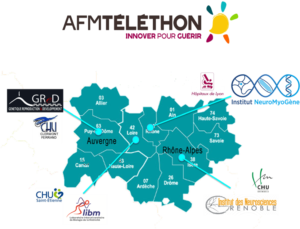
The alliance brings together the main research teams in Rhone Alpes Auvergne involved in research on neuromuscular disosrders, the local players of the Regional Reference Center for Rare Neuromuscular Diseases and the 4 University Hospital Research Centers involved in the study of the neuromuscular system and its pathologies:
- Lyon – 11 INMG teams: B. Chazaud, J. Courchet, V. Gache, A. Giglia Mari, V. Jacquemond, F. Le Grand, P. Lomonte, C. Marcelle, R. Mounier, H. Puccio, L. Schaeffer
- Clermont Ferrand – 3 teams of the GReD : C. Guillot, C. Jagla, V. Mirouse
- Grenoble – 1 team of the GIN : I. Marty
- Saint Etienne – 1 team of the LIBM: D. Freyssenet, 1 INMG team: J.C. Antoine
› RHU SMART
Spinal muscular atrophy caused by impairment of the SMN (survival of motor neurons) gene induces the death of neurons that control the activity of skeletal muscles. Currently about 1500 patients live in France with this disease. In its most severe form, it causes the death of most children before the age of 2 years. Revolutionary treatments recently developed by Roche, Novartis and Biogen have increased the life expectancy of children but have created a new clinical form of the disease which is crucial to characterize in order to allow good management of treated patients and consider future clinical trials to address functional deficits that persist despite treatment. Muscular atrophy is a major component of these deficiencies.
The RHU SMART (SMA Muscle Atrophy Remediative Therapy), led by Pr Laurent Schaeffer and endowed with funding of 9.4 million euros, has two main objectives:
– Describe the pathology of treated patients and identify relevant biomarkers through a multicenter and international natural history study.
– Develop a process for screening molecules to allow the emergence of treatments for muscle atrophy. SMART brings together 6 laboratory teams (B. Chazaud, J. Courchet, V. Gache, V. Jacquemond, R. Mounier, L. Schaeffer), the teams of D. Freyssenet and G. Millet from the LIBM in Saint-Etienne and that of F. Charbonnier from the University of Paris, 2 local biotechs (Cytoo, EnyoPharma) and 2 large industrial groups (Roche and Sysnav).
Our ambition for the SMART project is to initiate the creation of a clinical investigation platform for neuromuscular diseases that would combine academic research, therapeutic trials and access to innovative molecules in the field of neuromuscular diseases.
This network has been labeled by the Ministry of Health (Investissement d’avenir) and INSERM to bring neurology closer to immunology and develop innovative approaches for inflammatory diseases of the nervous and neuromuscular system
Kick off meeting:
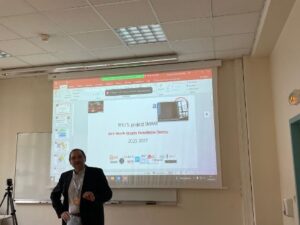
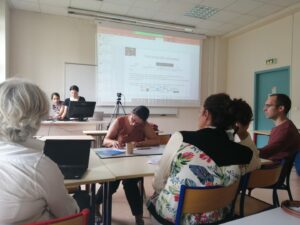
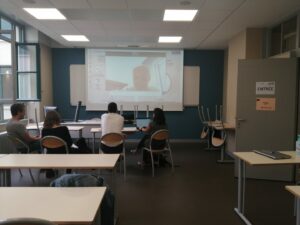
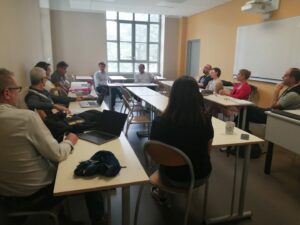
The kick off meeting of the RHU SMART took place on 27 May 2022, at the Rockefeller Faculty of Medicine and Pharmacy, Lyon.
40 participants in person and by videoconference (including the ANR) attended the kick-off meeting.
Different presentations were given in the morning. After the buffet, the participants met in different workshops: natural history, fatigue, screening and medicinal chemistry.
More information about RHU SMART is available on its website.
› The national network of health of the neuromuscular diseases (FILNEMUS): the active part played by the actors of the network MyoNeuRALP in the setting up of the sector illustrates the national recognition of our expertise in research, diagnosis, databases and therapeutic tests
› RESOCANAUX: this consortium aims to address, through collaborative research, the clinical, genetic, physiopathological and therapeutic aspects of neuromuscular diseases involving ion channels.
› A dense network of collaborations:
- Institute of Myology
- ISTEM Stem Cell Institute
- GENETHON
- Atlantic Gene therapy
- Timone Hospital, Marseille
- Creteil Hospital / Veterinary School of Maisons-Alfort
- IGBMC Strasbourg
› IDYLLE Collaboration

Karine Monier and her colleagues Arnaud Favier (IMP, Villeurbanne) and Christophe Place (Physics Laboratory at ENS Lyon) have been collaborating with the industrial partner Idylle since 2020 to commercialize their innovations in dSTORM super-resolution microscopy. As part of this effort, several service contracts have been secured, and four of their inventions have been transferred via CNRS Innovation:
in 2020: Everspark 1.0: long-life buffer for 2-color dSTORM imaging
- in 2023: Everspark 2.0: long-life buffer for 3-color dSTORM imaging with the green channel https://www.idylle-labs.com/shop/everspark-461?category=5 – attr=251
- In 2022: SpheroRuler: dark red luminescent calibration spheres with a diameter of 1 µm
- in 2023: SpheroRuler family: luminescent calibration spheres in various colors and diameters https://www.idylle-labs.com/shop/spheroruler-339?category=5 – attr=363,454
International visibility
› Lyon-Ottawa partnership: Join Institute for Neuromuscular research
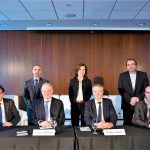
L. Schaeffer is the coordinator of the LIA JIN (Join Institute for Neuromuscular research). The CNMD is one of the largest institutes in the world dedicated to research on the neuromuscular system. It unites basic and clinical researchers from across the University of Ottawa and affiliated hospitals to advance our understanding of the underlying pathological mechanisms and identify novel treatment strategies for neuromuscular disease patients. Like our laboratory, the CNMD (Centre for Neuromuscular Disease) hosts muscle biology teams, neurobiologists and specialists of epigenetic regulation in muscle and neuronal cells forming a community of researchers and clinicians with expertise at all levels of the neuromuscular system with scientific expertise ranging from molecular biology, cell biology, electrophysiology to integrated human physiology. This partnership has been endorsed by CNRS with the label “Laboratoire International Associé”. The partnership benefits of an annual funding from Lyon university and CNRS to fund collaborative research programs and exchanges between the teams of the two laboratory.
› Bruker-Nano partnership
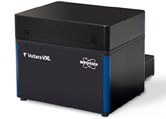
A scientific collaboration agreement was signed in 2024—and renewed in 2025 and 2026—between the CNRS and Bruker Corporation to support Karine Monier’s work on developing new dSTORM super-resolution tools, through the loan of a VXL microscope to the PGNM Unit. This system enables super-resolution optical nanoscopy by imaging single molecules using dSTORM, PALM, SPT, and automated DNA-PAINT, thanks to a microfluidic chamber coupled with the VXL. Under this agreement, the laboratory hosts scientists up to six times a year for two-day visits to conduct proof-of-concept nanoscopy experiments on their own samples.
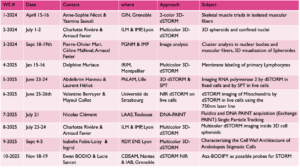
List of VXL discovery workshops in 2024 and 2025:
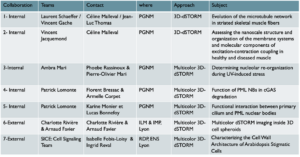
On the other hand, internal and external collaborations are conducted with interested teams to carry out a super-resolution project on the VXL. Assistance for acquisitions on the VXL is provided by a work-study engineer trained on the VXL system by Bruker. The tools developed by Karine Monier and her colleagues are made available to the collaborating teams, along with the sample preparation protocols and training in image analysis on the SRX software.
Eternity-PLUS Buffer For Three Color Nanoscale Imaging in Depth